
SAP-Based Solutions for Production Planning
Key Questions in Production Planning
- Are all relevant planning factors—such as capacity, materials, and timing—fully considered?
- Is there a single source of truth across functions and processes?
- How intuitive is the system? Does it proactively support users and anticipate planning requirements?
Production Planning: High Complexity, Multiple Variables
Manufacturing and production planning are closely interconnected with numerous departments and business functions. These dependencies add significant complexity to an already challenging planning environment. Common issues include friction and misunderstandings between departments, fragmented information flows, overlapping responsibilities, disparate systems, conflicting objectives, and inconsistent performance metrics.
Demand planning must be translated into primary and secondary requirements. The specific planning horizon, material volumes, make-or-buy strategies, and organizational ownership of the planning process vary from company to company. Depending on the organization, planning activities may be managed within logistics, production, or operational procurement.
What all companies share, however, is the need to evaluate, consolidate, and schedule a vast number of variables across a defined timeline. This level of complexity cannot be managed effectively through manual calculations or spreadsheet-based approaches.
Adding to this complexity are unforeseen disruptions and operational challenges that must be incorporated into planning decisions, including machine breakdowns, workforce absences, supplier shortages, and changing customer demand schedules.
Enhancing SAP with a Certified Production Planning Solution
While SAP provides a strong foundation, operational planning processes often require additional capabilities. This is where an integrated Manufacturing Solution for Production Planning delivers significant value.
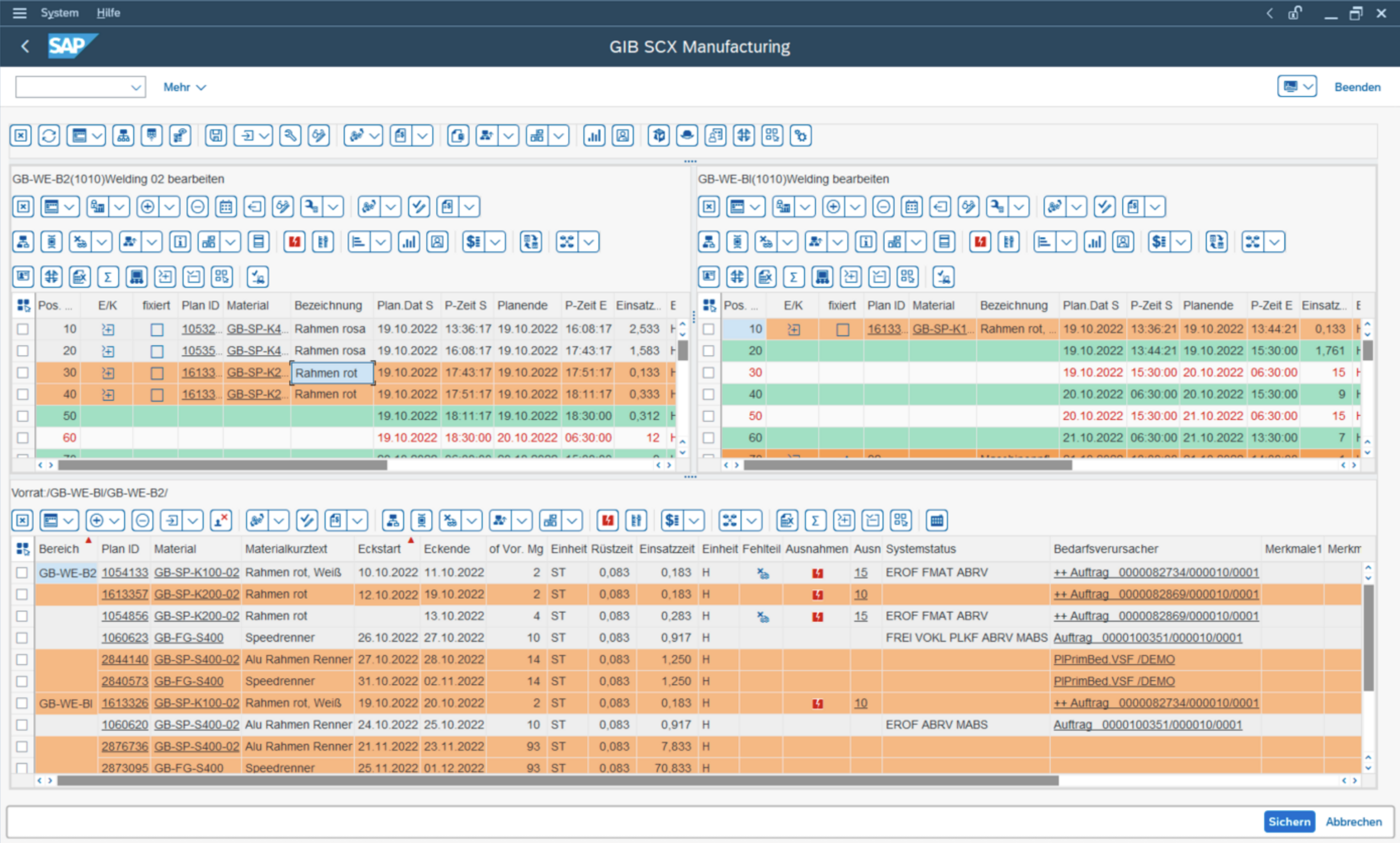
Fully embedded within the SAP environment, the solution enhances both functionality and user experience. Role-based processes are intelligently designed to guide users through their tasks, ensuring that relevant information is presented at the right time and in the appropriate business context.
Key capabilities include:
- Work queues and prioritized task management
- Automated recommendations and decision support
- Traffic-light alerting mechanisms
- Multi-screen work environments
- Advanced graphical visualizations
- Drag-and-drop planning functionality
- Scenario simulation and what-if analysis
- Modern SAP Fiori user experience